

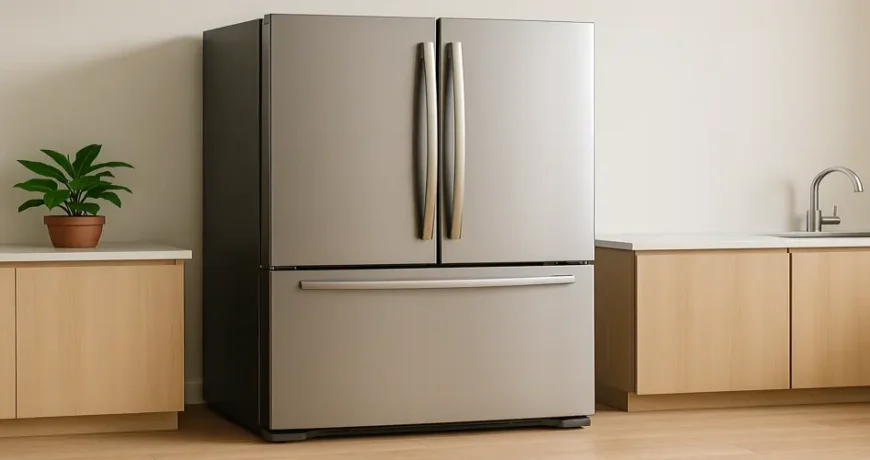
Refrigerators are essential household appliances that operate continuously, accounting for a significant portion of residential energy consumption, typically 13% to 15% of total household electricity use. Given this substantial energy footprint, selecting an energy-efficient refrigerator is a crucial decision that impacts not only your utility bills but also your home’s environmental sustainability.
Here at Appliance Now, we understand how important it is to make an informed purchase. Leveraging years of expertise in appliances, we’ve crafted this comprehensive guide to help you navigate the complex landscape of energy-efficient refrigerators, ensuring you choose the right model that meets your needs and saves you money.
Understanding Refrigerator Energy Consumption: What Drives Efficiency?
Refrigerator energy consumption depends on a complex interplay of factors:
- Compressor technology: The compressor is the heart of the cooling system. Modern inverter compressors, which vary their speed according to cooling demand, reduce energy use by 20-30% compared to conventional fixed-speed compressors.
- Insulation quality: The type and thickness of insulation materials (often polyurethane foam) directly impact thermal retention. Research shows that improvements in insulation density can reduce energy loss by up to 25%.
- Refrigerant type: The move from older refrigerants like R-134a to more eco-friendly options such as R-600a (isobutane) improves both environmental impact and thermodynamic efficiency.
- Design and airflow: Effective internal air circulation and door seal integrity prevent cold air leakage, which otherwise causes compressors to work harder and longer.
- Usage patterns and settings: User behavior, including temperature settings, door opening frequency, and proper stocking, significantly influences actual energy consumption.
Key Criteria for Selecting an Energy-Efficient Refrigerator
1. Look for Energy Star Certification
Energy Star certification remains the most reliable third-party validation for energy efficiency. According to the EPA’s 2023 data, Energy Star-certified refrigerators use approximately 10-25% less energy than federal minimum standards, translating into average savings of 100-150 kWh annually. This is achieved through a combination of advanced compressors, better insulation, and efficient components.
Here at Appliance Now, all our recommended refrigerators carry this certification to ensure you’re getting the best value and performance.
2. Choose the Right Size and Capacity
Studies by the U.S. Department of Energy (DOE) show that refrigerator energy use increases roughly linearly with volume. An oversized unit not only wastes energy but also occupies more kitchen space. For typical families of 3-4, models between 18 and 22 cubic feet strike an optimal balance between storage capacity and energy use.
Our experts at Appliance Now can help you select the perfect size based on your household’s unique needs, ensuring you don’t pay for unused space or excess energy.
3. Select the Appropriate Refrigerator Style
- Top freezer models: Statistically, these models consume the least energy due to simpler airflow design and smaller evaporator areas.
- Bottom freezer models: Slightly less efficient but offer ergonomic benefits.
- Side-by-side and French door models: More popular for aesthetics and convenience but tend to consume 10-15% more energy due to added features and door design.
Here at Appliance Now, we provide clear comparisons of styles to help you weigh energy efficiency against lifestyle preferences.
4. Compressor Technology and Controls
Inverter compressors adapt to varying cooling loads, improving efficiency and reducing mechanical wear. Additionally, smart sensors monitor internal temperature and humidity, optimizing compressor operation and reducing defrost cycles, a major source of wasted energy in older models.
Our appliance specialists at Appliance Now prioritize models with these advanced features to ensure you get the best energy performance.
5. Insulation and Build Quality
Industry research highlights that high-density, closed-cell polyurethane foam insulation reduces thermal conductivity significantly compared to older insulating materials. Pay attention to door gaskets and seals. Well-designed magnetic seals prevent cold air leaks that can increase energy consumption by up to 25%.
You can trust Appliance Now to source refrigerators with premium build quality and insulation standards.
6. Additional Features and Their Impact
While modern refrigerators often include features like ice makers, water dispensers, and LED displays, these add-ons increase baseline energy consumption. For example, ice makers can add approximately 50-100 kWh annually, negating some efficiency gains. Prioritize features based on your needs rather than perceived luxury.
Our team at Appliance Now will guide you on which features add value without compromising efficiency.
Key Criteria for Selecting an Energy-Efficient Refrigerator
Even the most efficient refrigerator loses performance without proper use.
- Optimal Temperature Settings: Maintain fridge temperature at 37–40°F (3–4°C) and freezer at 0°F (-18°C) as recommended by the DOE for best energy use without compromising food safety.
- Location Matters: Avoid placing the refrigerator near heat sources (ovens, dishwashers) or in direct sunlight, which increases compressor workload.
- Seal Integrity: Routinely inspect and clean door gaskets to maintain airtight seals.
- Defrost Regularly: For manual defrost models, excess frost buildup acts as insulation, forcing the compressor to consume more power.
- Avoid Frequent Door Openings: Limit door openings and ensure quick access to prevent temperature fluctuations.
Explore Energy-Efficient Options at Appliance Now
Looking for the best deals and selections? Appliance Now offers a wide range of new and used appliances, including refrigerators from trusted brands. Whether you’re shopping in Kingston, Cornwall, or Pembroke, we provide local expert support and competitive pricing.
Discover premium brands like Bosch appliances in Ottawa, or browse our comprehensive store directory to find a location near you.
Final Recommendations: How to Buy Smart with Appliance Now
- Always prioritize Energy Star certification and compare EnergyGuide labels.
- Match refrigerator size to your household needs to avoid unnecessary energy waste.
- Choose proven compressor technologies, such as inverter models.
- Evaluate if additional features are worth the extra energy costs.
- Maintain your refrigerator according to manufacturer guidelines.
By integrating these expert insights from Appliance Now, you ensure you invest in a refrigerator that balances efficiency, functionality, and long-term reliability, saving you money and reducing your environmental footprint for years to come.
